

Choosing an interior designer gets difficult when three Dubai studios show equally polished villas, but their proposals cover very different work. One may include authority approvals, technical drawings, sourcing, site supervision, and styling. Another may call itself “full service” while leaving several of these tasks unclear.
That gap can lead to extra fees, delayed decisions, unsuitable materials, and confusion during construction. You need a designer who understands your lifestyle and can carry the agreed vision through to a finished home.
This article gives you eight practical checks for comparing portfolios, fees, timelines, communication, and execution. Keep reading to learn how to identify a luxury interior designer who can manage the complete project, not only present an impressive concept.
You can also review the available interior design services in Dubai to understand how much support your project may need.
The Quick Rule for Choosing an Interior Designer
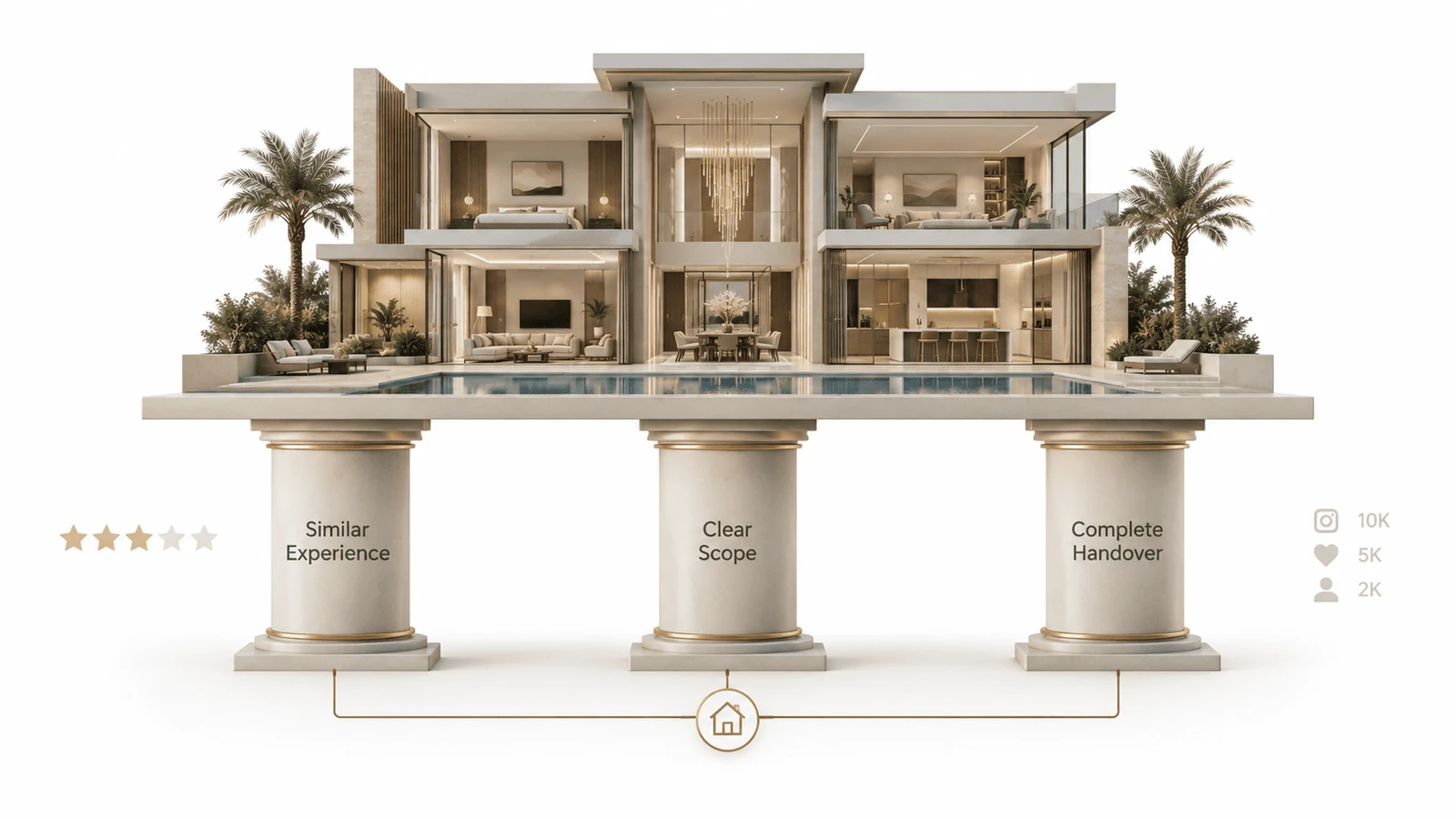
Choose a designer who can prove three things. They understand homes like yours, their proposal covers your expected services, and their team can carry the design through to handover.
A list of top interior designers in Dubai can help you discover suitable names. Still, completed work, clear documents and direct answers should guide your final decision.
1. Look Beyond Their Best Portfolio Image
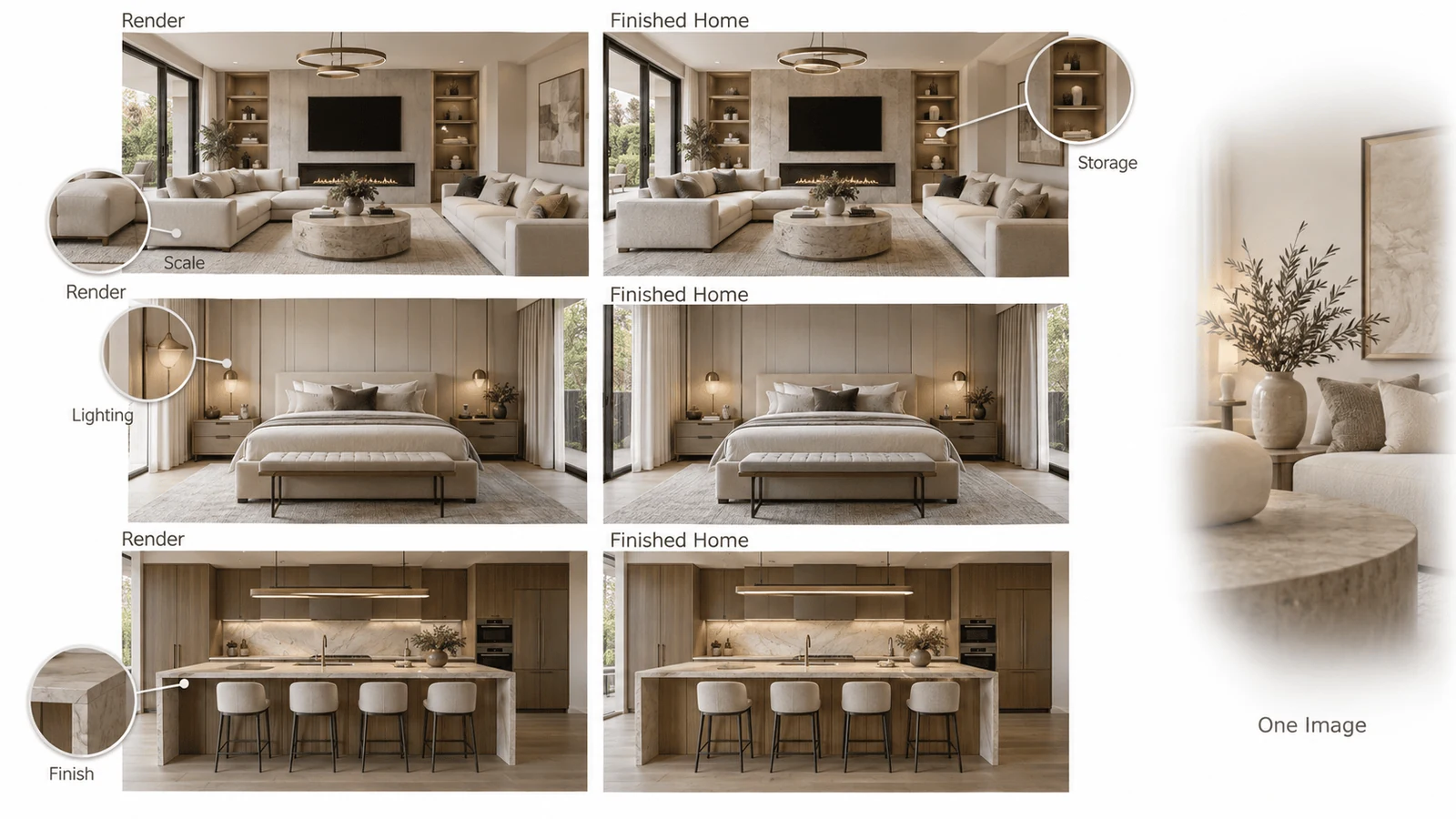
One beautiful living room cannot show how a designer manages an entire home.
Start by viewing several completed residential projects, including bedrooms, kitchens, bathrooms, storage and connecting spaces. This wider view reveals how the designer handles flow, proportion and consistency.
A completed interior design portfolio can also help you compare design ideas with finished rooms before creating your shortlist.
Next, check if the portfolio includes properties similar to yours. A villa designer may understand formal entertaining areas, family lounges and large amounts of custom joinery. Meanwhile, apartment projects can reveal skill in working around limited storage, fixed plumbing and building restrictions.
You should also separate completed photographs from 3D visualisations. Renders present the intended design, while project photographs reveal the final material and installation quality.
Consider these questions while reviewing their work:
- Does the portfolio show complete rooms from different angles?
- Can you find a home similar to your property?
- Does each project have its own character?
- Do the furniture dimensions suit the rooms?
- Are practical details such as storage and lighting visible?
- Can the designer explain the problems they solved?
A top interior designer should discuss the planning behind each room instead of focusing only on its appearance.
2. Choose Experience That Matches Your Luxury Home
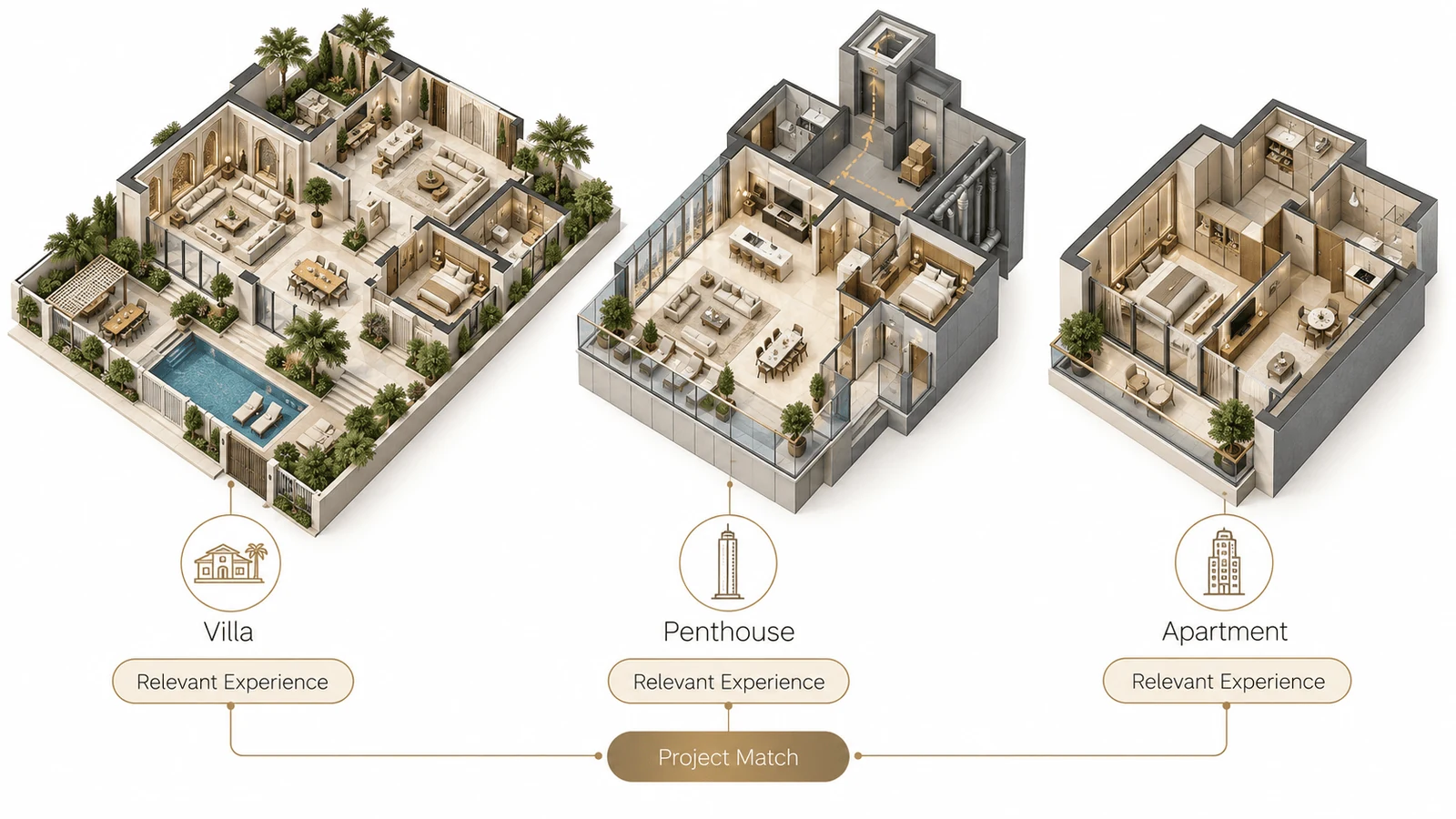
Years in business provide useful context, but similar project experience gives you stronger evidence.
A villa in Emirates Hills creates different demands from a penthouse in Downtown Dubai. The villa may include formal living areas, family spaces, guest suites, outdoor zones, and staff rooms. In contrast, a penthouse can involve service-lift bookings, delivery restrictions and fixed plumbing positions.
Tell each shortlisted interior designer in Dubai about your property type, approximate size and intended scope. Then ask to see completed projects with similar requirements.
Look for experience with:
- A similar property type
- A comparable floor area
- The same level of renovation
- Your expected design standard
- Bespoke furniture and joinery
- Site coordination
- Residential handover
You should also meet the people who will work on your home. The founder may attend the first presentation, while a project designer handles the daily work. This structure can work smoothly when everyone’s role remains clear.
Before committing, read more about the interior design team and confirm who will make decisions, attend meetings and answer your questions.
Checking the delivery team is an important part of how to choose an interior designer. After all, the person presenting the service may not manage your project.
3. Understand the Interior Design Process Before You Sign
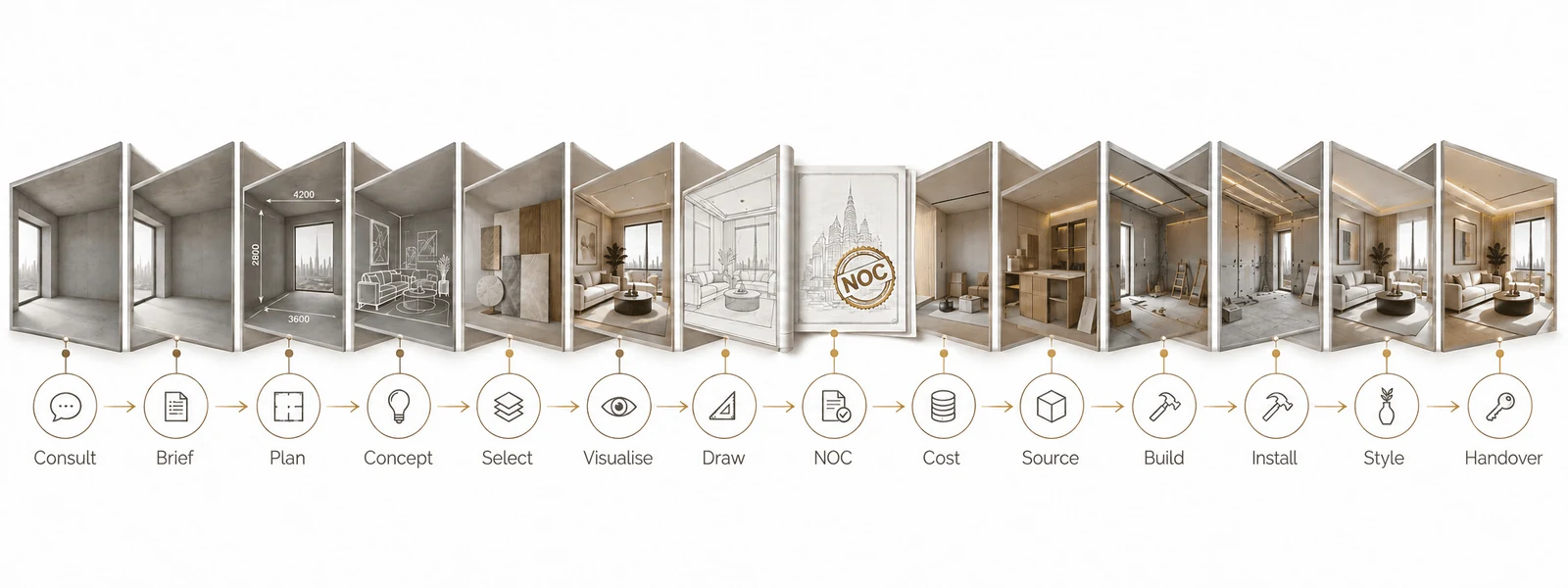
A clear process helps you understand what happens after the first concept receives approval.
Ask each studio to explain the project from the opening consultation to handover. You should know when the team studies your lifestyle, prepares layouts, develops concepts and selects materials.
A complete residential process may cover:
- Consultation and site review
- Lifestyle and project brief
- Space planning
- Concept development
- Material and furniture selection
- 3D visualisation
- Technical drawings
- Cost planning
- Procurement
- Site coordination
- Installation and styling
- Final inspection and handover
Technical drawings give contractors the measurements and instructions needed to build the approved design. They may include electrical layouts, ceiling plans, flooring details and drawings for custom cabinets.
In addition, the proposal should state how many revision rounds the fee covers. It also needs to explain how you will approve layouts, materials and later changes.
Some Dubai projects require building or authority documents before work begins. The Dubai Development Authority’s fit-out permit requirements include owner approval, relevant authority approvals and stamped drawings for applicable projects.
Therefore, ask who will prepare and submit these documents. The designer should also explain who will pay the related charges.
4. Check How a Luxury Interior Designer Handles Customisation
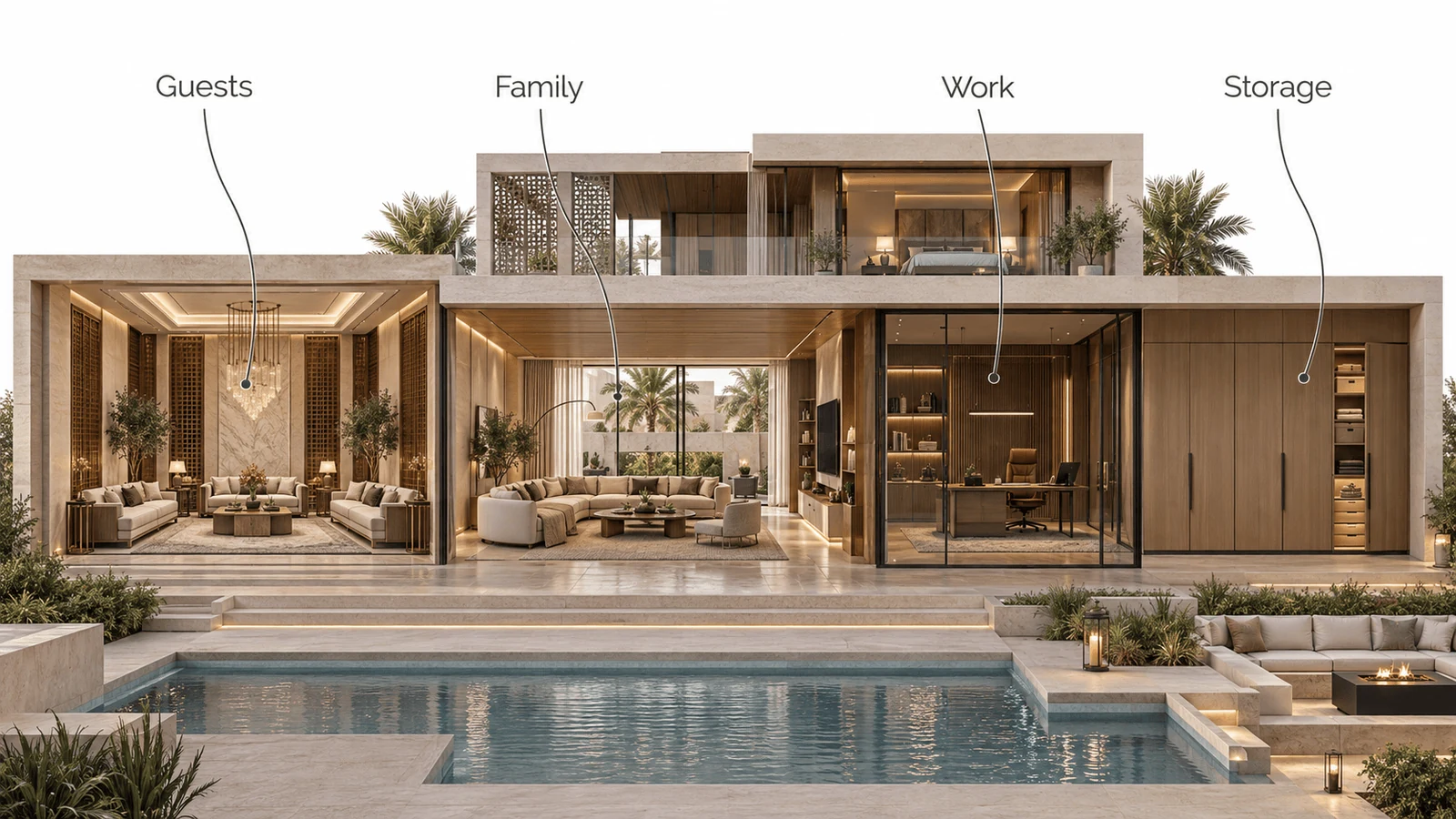
A luxury home needs to support the people who live there every day.
During the consultation, notice what the designer wants to learn about you. They should ask how you use each room, how often you entertain and what you need to store. Children, pets, privacy and working from home can also affect the plan.
For example, a family villa may include a formal majlis and a separate family lounge. Both rooms need seating, but they support different people and activities. As a result, their layouts, materials and lighting should respond to those differences.
A luxury interior designer should consider:
- Furniture made for exact room dimensions
- Storage based on your belongings
- Lighting for different times and activities
- Comfortable movement between rooms
- Privacy between family and guest areas
- Technology built into furniture and cabinets
- Materials suited to daily use
- Connections between indoor and outdoor spaces
Ask to see a custom detail in a drawing and then in the completed home. This comparison shows how well the studio carries an original idea through execution, which is central to reliable custom interior design services.
5. Review Their Material, Furniture and Vendor Network
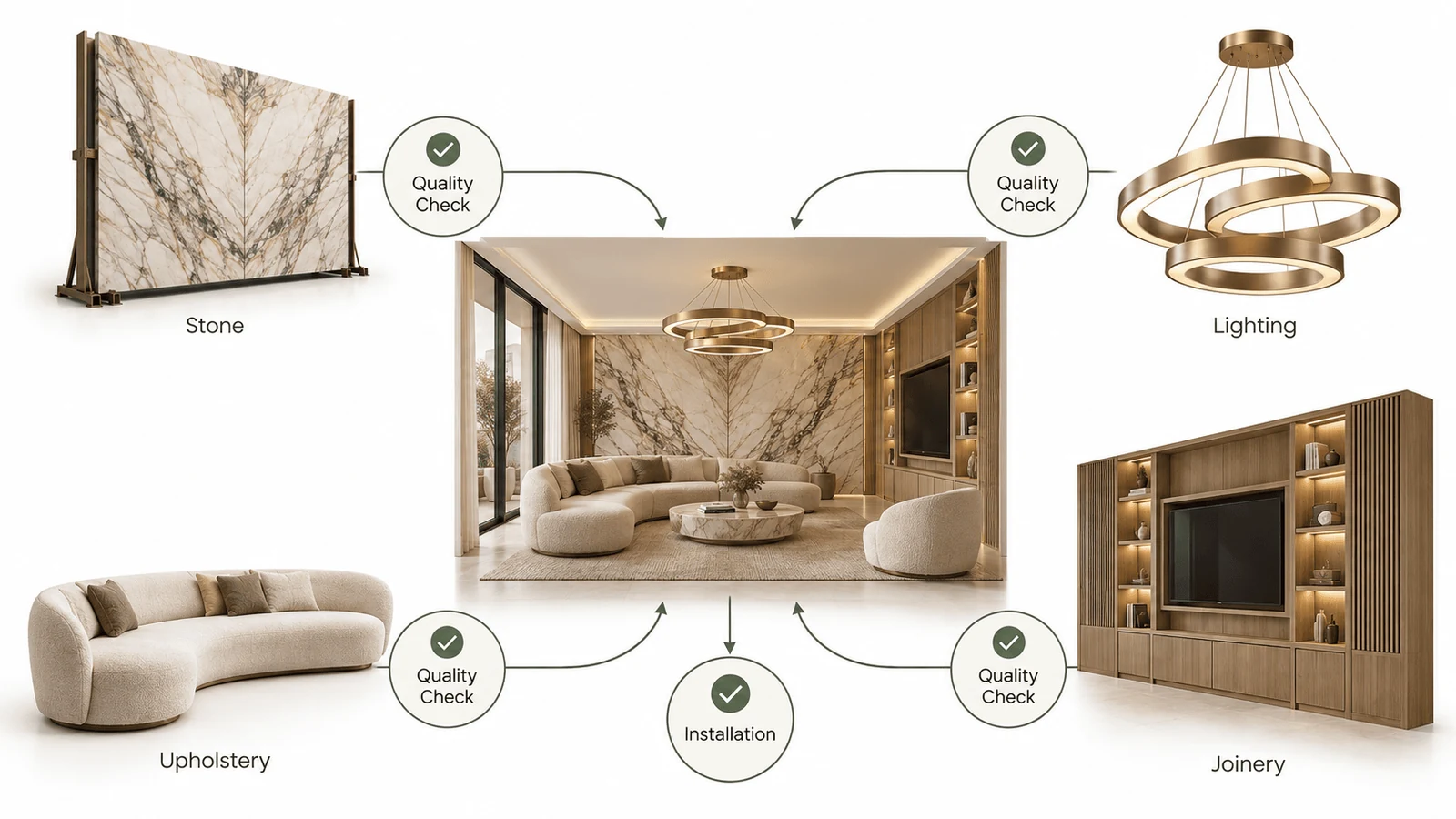
A strong design still depends on reliable suppliers, furniture makers and installers.
Review the studio’s network for stone, timber, fabrics, lighting and furniture. An experienced team should know which suppliers can meet the required standard and deliver within the proposed schedule.
Imported furniture may need longer lead times, while natural stone, timber and fabric can differ slightly from the sample. Because of this, the designer needs a clear system for reviewing materials before placing orders.
Discuss these points before approving the proposal:
- Which pieces will be custom-made?
- Who will manufacture them?
- Can you inspect physical samples?
- How will the team approve natural material variations?
- Who checks furniture before delivery?
- Which products will come from outside the UAE?
- What happens if an item arrives late or damaged?
- What warranty covers each product?
Ask how the proposed materials will perform under Dubai’s sunlight, air conditioning, dust and humidity. You should also understand what maintenance each finish will require.
A long vendor list means little without proper quality control. The team should track samples, approvals, orders, deliveries and installation from one stage to the next.
6. Compare Interior Designer Fees and the Full Project Cost
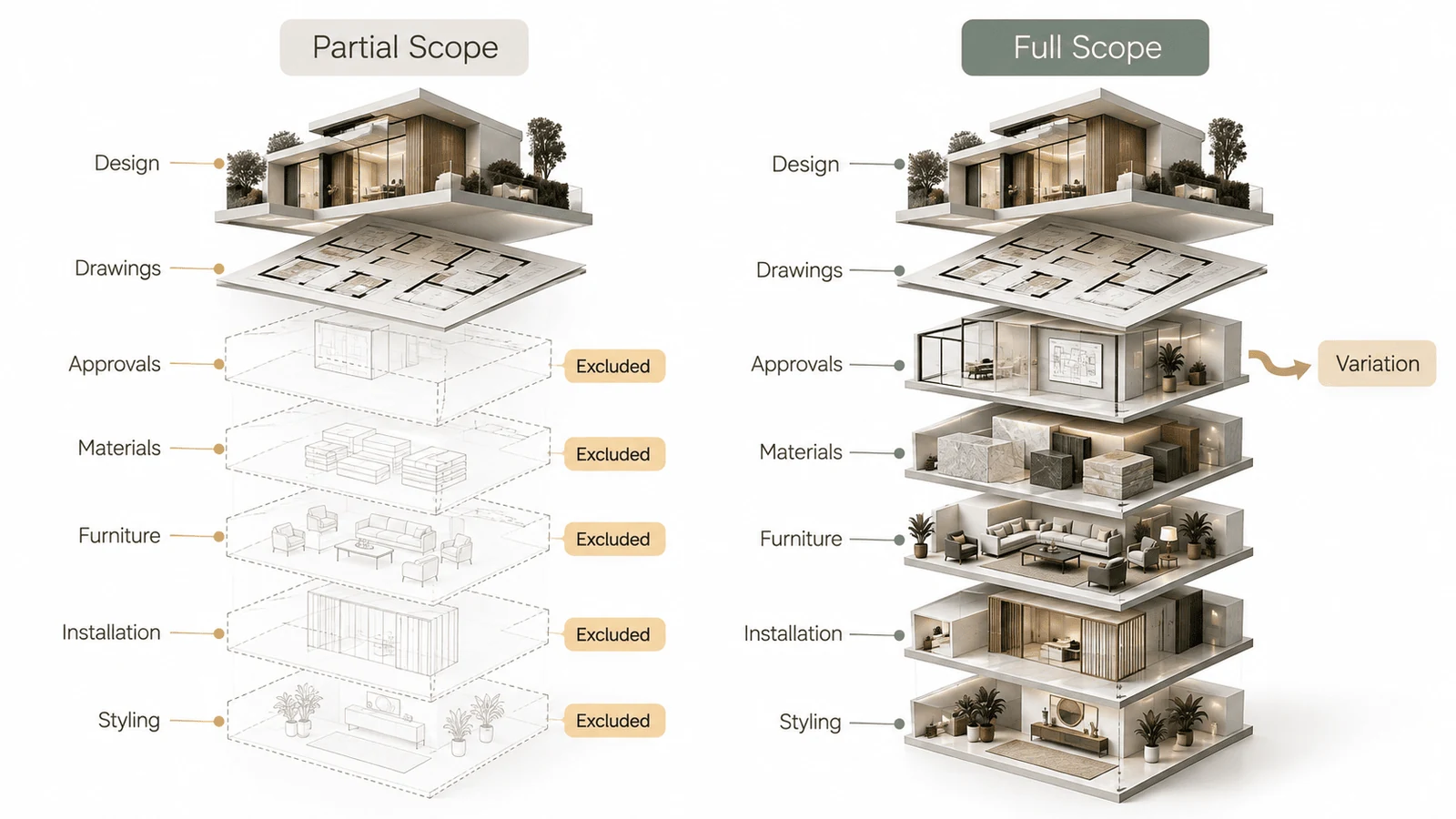
Two proposals with different services cannot be compared through their final totals.
One designer may include technical drawings, procurement and regular site visits. Another may provide the concept and 3D renders only. Although the second quote may look lower, you could need other professionals to complete the work.
Ask for a breakdown covering:
- Design fees
- Project management
- Technical drawings
- Procurement charges
- Custom furniture
- Materials and finishes
- Contractor costs
- Delivery and installation
- Approval fees
- Styling and accessories
- Taxes and exclusions
Budget changes remain a common concern for homeowners. Marine Sargsyan, Head of Economic Research at Houzz, reported through the 2026 U.S. Houzz & Home Study that the research included 10,176 renovating homeowners. Among those who set an initial budget, 37% exceeded it.
Although the study covers US homeowners, it shows why clear pricing and change rules matter in any major renovation.
After comparing the costs, examine the payment schedule. Each payment should connect to a clear stage or deliverable, such as approved concepts, completed drawings or site progress.
You may also see provisional allowances in the proposal. These are estimated amounts used when the final product or material has not been selected. A low allowance can make the first estimate look attractive, but the cost may rise after the final choice.
Finally, ask how the team manages variations. A variation is a change to the approved scope, material or design. Before starting the additional work, the designer should explain its effect on cost and time.
7. Test Their Communication Before You Commit
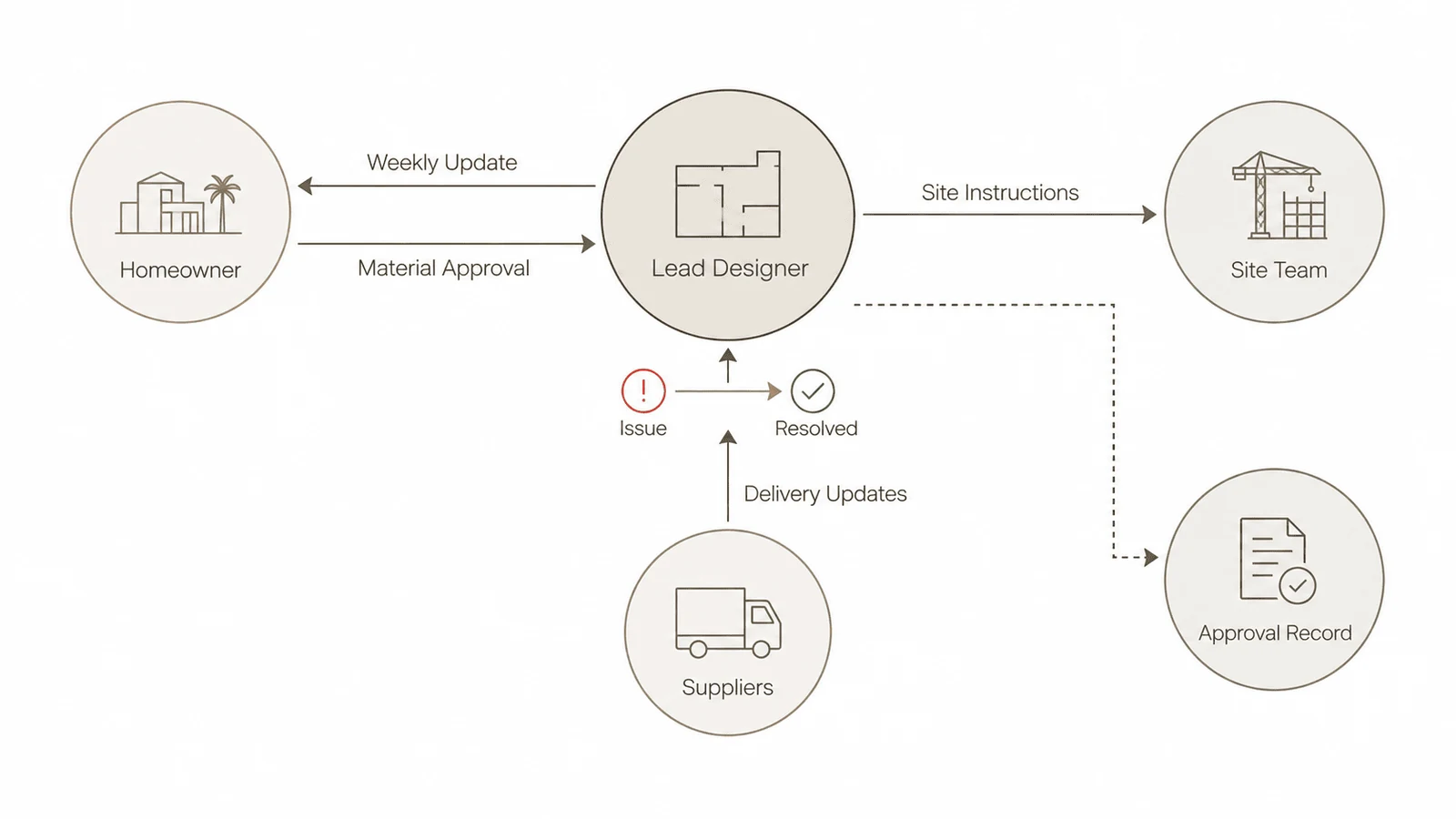
The selection stage gives you an early view of the future client experience.
Notice if the designer answers clearly and follows up when promised. If you already need to chase basic information, communication may become harder once several suppliers and contractors join the project.
Every proposal should identify your main contact. It should also explain how often you will receive updates and who will attend site meetings.
Discuss:
- Weekly or milestone-based updates
- Your main design contact
- The person responsible for the site
- Normal response times
- The material approval process
- How the team reports delays
- Where design changes are recorded
- Support after handover
In addition, request references from two recent clients with similar homes. Ask them about budget clarity, response times, site supervision and finished quality.
You can also ask the designer about a project that faced a serious delay or execution problem. A top interior designer should explain what happened, how the client was informed and how the team solved it.
Clear communication cannot remove every project problem, but it can keep a small issue from becoming an expensive one.
8. Choose a Design Vision That Works With Your Life
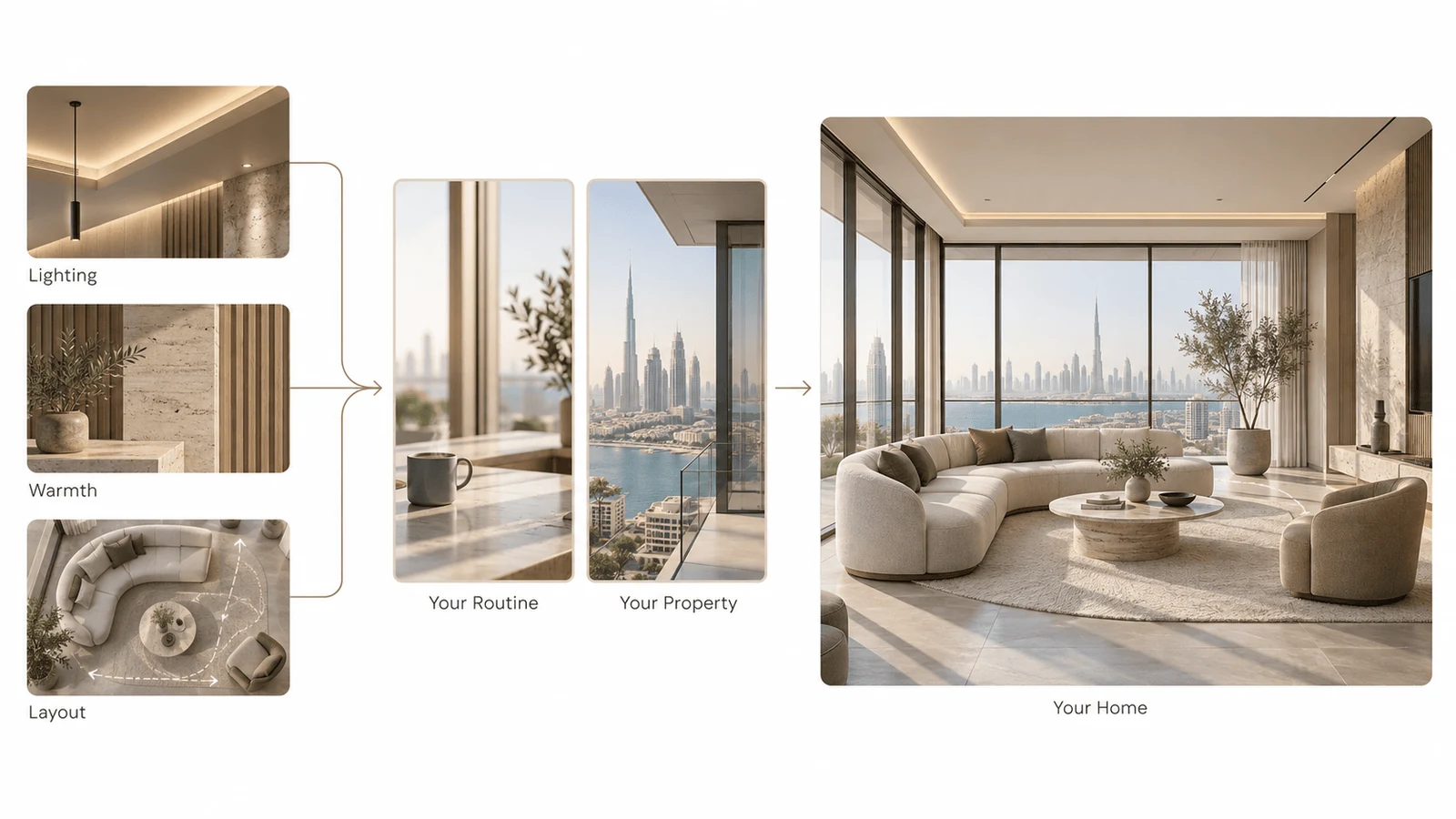
Your preferred look matters, and the finished home still needs to suit your property and routine.
Before meeting the shortlisted designers, collect reference images that show specific ideas. You may like the lighting in one room, the warm materials in another and the furniture layout in a third.
If you still need to define your preferences, use this guide to choosing an interior design style before comparing different creative directions.
Explain the details you like instead of relying on a broad term such as modern or luxurious. Since these words can mean different things to different people, clear examples will make your expectations easier to understand.
Then listen to how the designer responds. They should connect your ideas to the architecture, layout and natural light in your home.
At times, they may recommend another material or furniture arrangement. Your first choice could create a problem with maintenance, comfort or proportion, so a clear explanation should support the alternative.
You need room to express your taste, and you are also paying for professional judgement. Be careful with a designer who agrees with every request without discussing its effect on the finished home.
Personal chemistry also matters because you may work together for several months. Choose someone you can speak to openly when you feel unsure or disagree with a suggestion.
How to Choose an Interior Designer Who Understands Luxury
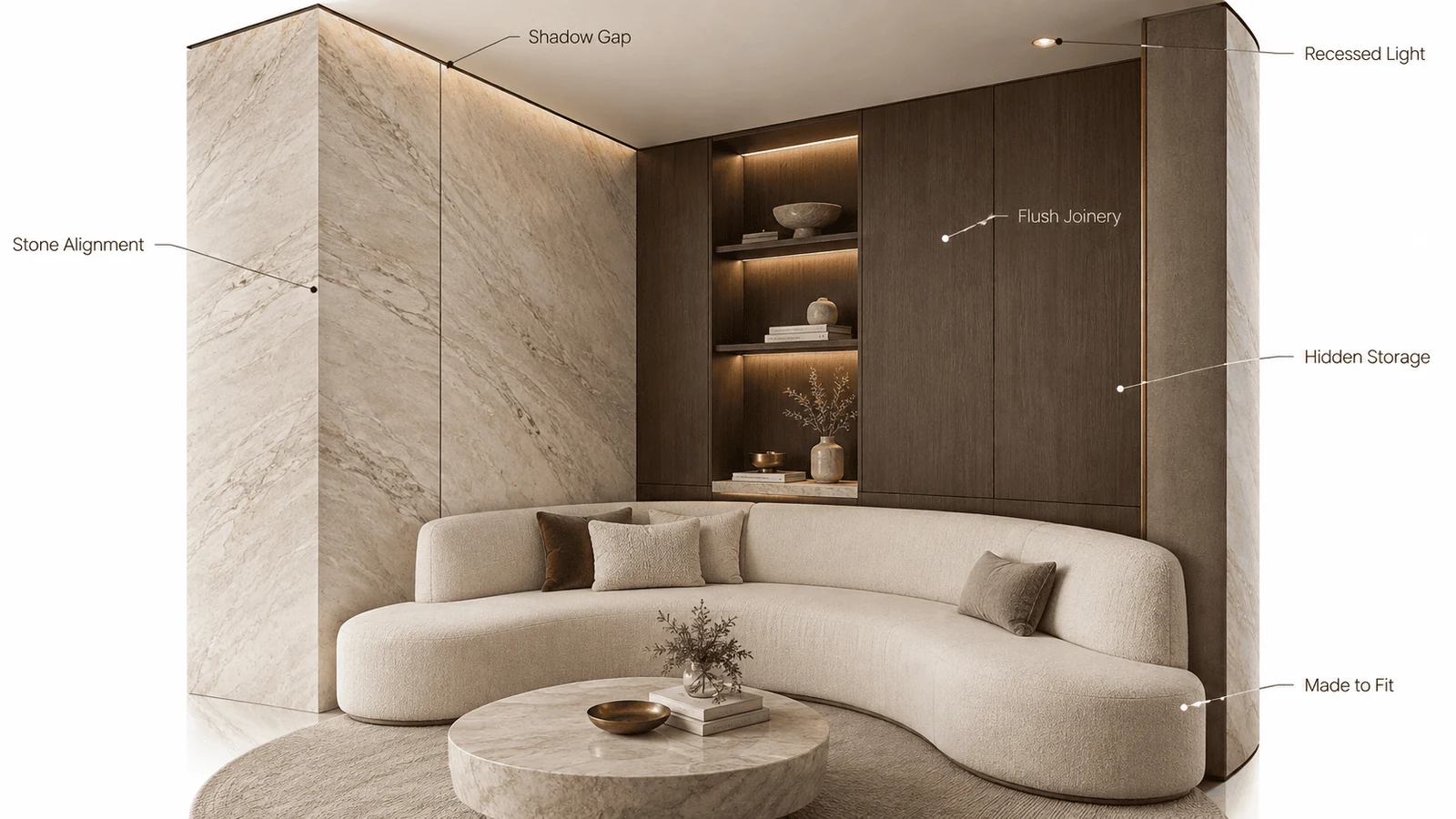
Premium products alone cannot create a well-designed luxury home because every detail must work together.
A luxury interior designer studies proportion, circulation, storage, lighting and daily comfort before finalising materials. The service may also cover bespoke furniture, specialist lighting, premium finishes and close site coordination.
Look for:
- An original design for your property
- Detailed technical drawings
- Access to skilled craftspeople
- Physical material samples
- Custom furniture and cabinets
- Quality checks during production
- Installation supervision
- Final styling and aftercare
Small decisions often reveal the standard of the work. These include the direction of a stone pattern, the alignment of cabinet doors and the position of switches.
When the team controls these details, the completed home feels consistent from one room to the next.
Questions to Ask Before Hiring an Interior Designer
Use one set of questions during every consultation, so you can compare the answers fairly.
Ask each designer:
- Can you show completed homes similar to mine?
- Who will lead my project after I sign?
- What does your proposal include and exclude?
- How many revisions does the fee cover?
- Which technical drawings will I receive?
- Who manages procurement and supplier payments?
- How will I approve materials and furniture?
- How do you calculate additional work?
- Who checks the site against the approved drawings?
- Who handles building or authority approvals?
- Can I speak with two recent clients?
- What support do you provide after handover?
- What could change the budget or timeline?
Once you have the answers, compare them beside the portfolio, scope, fee and timeline. Rankings may help create a shortlist, but clear answers will help you identify the right professional.
Choose Your Interior Designer With Clarity
Knowing how to choose an interior designer comes down to three things: relevant experience, a clear scope and reliable execution.
Review completed projects that match your home, and confirm who will manage the work. Then compare the fees, materials, communication process, approval responsibility and timeline in writing.
The right luxury interior designer should understand your taste while guiding practical decisions. You should feel comfortable asking questions and know what will happen after you sign.
As a Dubai luxury interior design studio, Euphoria Interiors brings this balance of design vision and dependable delivery to villas, apartments and penthouses.
If you are choosing an interior designer in Dubai for a villa, apartment, townhouse or penthouse, book an interior design consultation. You can discuss your property, lifestyle, preferences, budget and expected timeline before making your final decision.
FAQs
How do I choose a luxury interior designer in Dubai?
Start with completed homes that match your property, preferred style and project size. Next, compare the services, fees, timelines and level of site involvement in writing. You should also meet the person managing the daily work, speak with recent clients and confirm who handles procurement, approvals, quality checks and handover.
What should I check in an interior designer’s portfolio?
Look for complete residential projects instead of isolated room photographs or 3D renders. Check how the designer handles layout, lighting, storage, furniture scale and transitions between rooms. A top interior designer should also explain the client’s original requirements, the property challenges and how the completed design solved them.
How much does a luxury interior designer charge in Dubai?
The cost depends on the property size, project scope, design detail and level of involvement. Designers may charge a fixed fee, a fee based on area or a percentage of the total project cost. Compare what each proposal includes because drawings, procurement, site supervision, approvals, installation and styling may carry separate charges.
What makes a luxury interior designer different?
A luxury interior designer usually provides more detailed planning, custom furniture, bespoke cabinets, premium material sourcing and closer control during execution. The design should respond to the homeowner’s lifestyle and the property’s architecture. Careful material selection, specialist craftsmanship and quality checks also help maintain a consistent standard throughout the completed home.
How long does a luxury home interior project take?
The timeline depends on the property, approval requirements, custom work and material availability. Design development may take several weeks, while procurement and execution can take several months. Ask for a programme that separates design, approvals, ordering, construction and installation, so you can see which stage controls the expected completion date.
Should I hire an individual designer or a full-service design firm?
Choose an individual designer when you mainly need creative direction and can manage contractors or suppliers yourself. A full-service firm may suit a large villa, penthouse or complete renovation because one team can coordinate design, drawings, procurement, site work and installation. Compare their responsibilities carefully before deciding which model suits your time and project.
